
Earlier this week, TM has successfully conducted a 5G Standalone (SA) trials on both 700MHz and C-Band (3.5GHz) simultaneously on a converged core network. This is a world-first but what does it actually mean to us as consumers?
We had the opportunity speak to TM’s Head of Mobile 5G, Nor Hisham Md Nordin and here’s why this 5G configuration will provide a significant improvement in nationwide connectivity.
Standalone vs Non-Standalone 5G
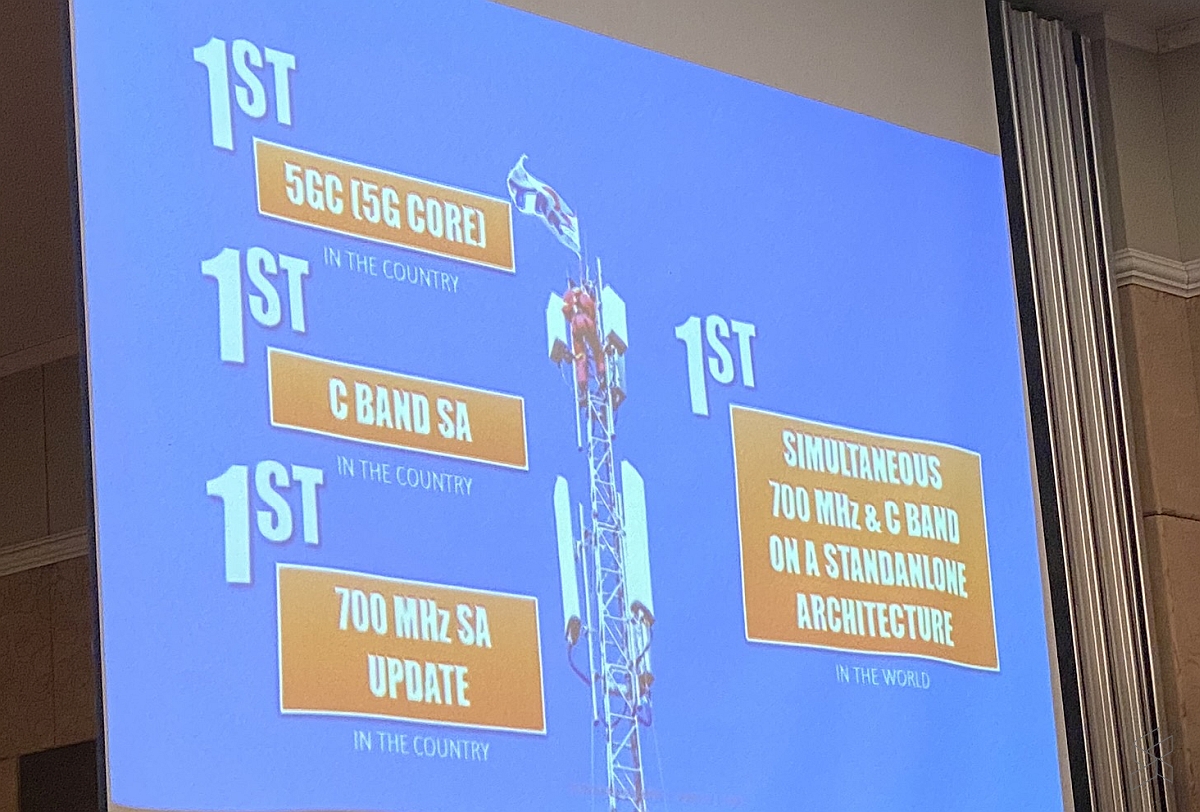
TM aims to be Malaysia’s first 5G Standalone (SA) network which will provide the full potential of 5G. Most early 5G networks are mostly using the 5G Non-Standalone (NSA) architecture that still relies on 4G LTE as an anchor.
With 5G SA, you can think of it as a pure 5G network that utilises a 5G core and it delivers more than just faster speeds. 5G SA will enable ultra-low latency below 10ms and it can also support millions of connected devices in a square kilometre. This will open up new possibilities for various applications including remote surgery and autonomous vehicles.
Why 700MHz SA?
At the moment, Streamyx customers are offered Unifi Air which provides an average of 20Mbps with unlimited quota for RM79/month. Unfortunately, its coverage is very limited and it operates at a higher 2.3GHz band on TDD-LTE.
700MHz being a lower frequency band offers a much wider coverage. We are told that a single base station theoretically can cover up to 10 km, making it ideal to connect rural areas that lack high-speed internet access.
700MHz 5G vs 700MHz 4G
From TM’s tests, its 700MHz SA network can deliver speeds of more than 200Mbps. That’s almost 7x higher than the current NFCP’s target of providing an average of speed of 30Mbps to 98% of populated areas by 2023.
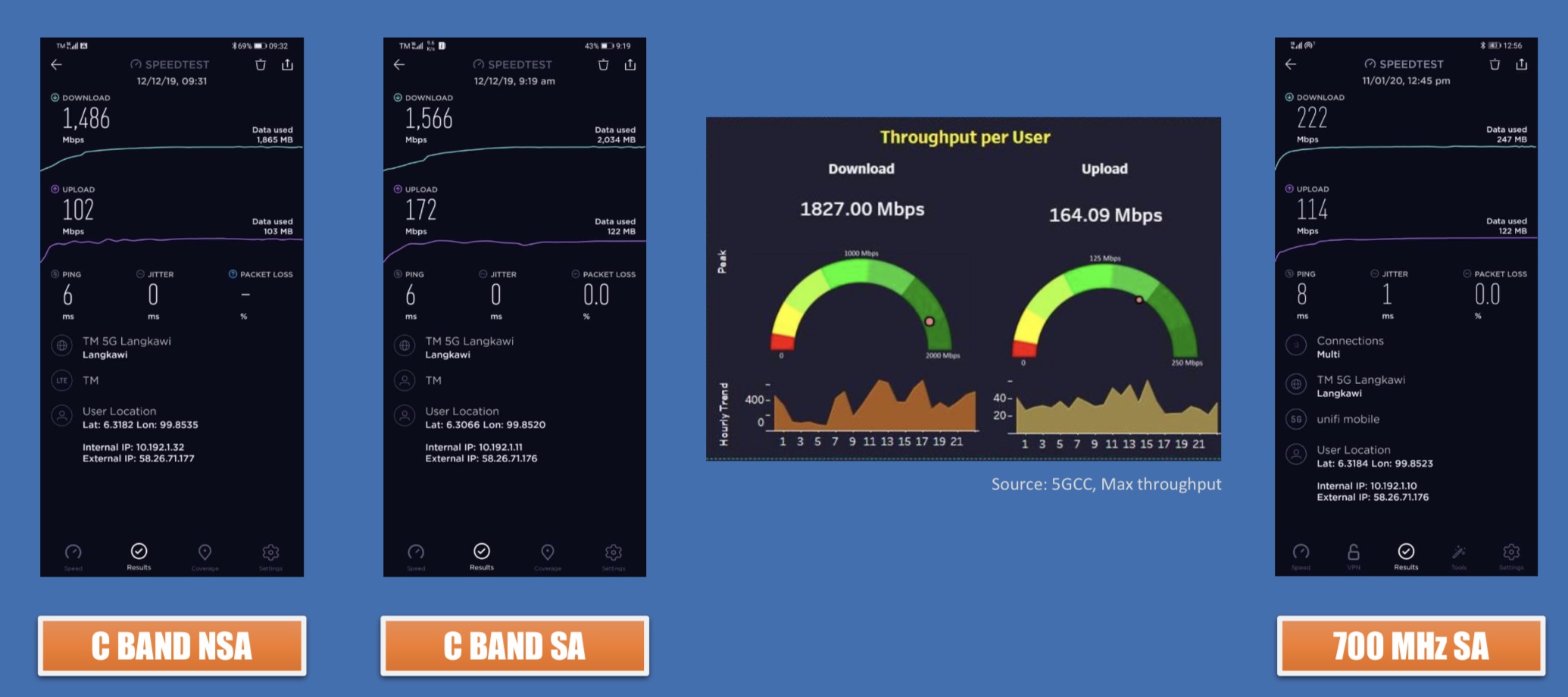
Although some were expecting 700MHz to be allocated for 4G, TM believes that using it for 5G would be a better approach as it can deliver 20-30% better performance than 4G, which hovers around 150Mbps on the same spectrum. Apart from Malaysia, both Norway and the United Kingdom are also using 700MHz for 5G.
However, it is possible to utilise 700MHz for both 5G and 4G simultaneously via Dynamic Spectrum Sharing (DSS). TM is targetting to conduct DSS trials around Q2 2020.
700MHz + 3.5GHz offers wide and high capacity.

As announced by MCMC, Malaysia will be using 700MHz, 3.5GHz, 26GHz and 28GHz bands for 5G use. With TM’s converged approach for both 700MHz and 3.5GHz, users can expect a wider and high-capacity 5G network.
3.5GHz offers high-capacity to support more users in high-density areas, while the 700MHz expands its 5G reach for wider coverage for rural areas and inter-state highways.
The higher 26GHz and 28GHz bands can offer extremely high bandwidth, however, the coverage footprint will be very limited and it can’t really penetrate walls. The biggest challenge is our tropical weather as mmWave signals are easily affected by light rain. TM is currently testing mmWave in Subang Jaya for several use cases.
The 5G spectrum will be available for commercial deployment in Q3 2020 and the two lower 700MHz and 3.5GHz bands will be assigned to a consortium through a bidding process by Q2 2020.