
• 中文版
  • BM
  • News
  • Deals
  • Reviews
    • First Impressions
    • Hands-on
    • Comparisons
  • Tech
    • Mobile
    • Computers
    • Cameras
    • Wearables
    • Audio
    • Drones
  • Telco
    • Celcom
    • Digi
    • Maxis
    • Time
    • Tune Talk
    • U Mobile
    • Unifi
    • Yes
  • Cars
  • Contribute
  • Jobs
Menu
  • 中文版
  • BM
  • News
  • Deals
  • Reviews
    • First Impressions
    • Hands-on
    • Comparisons
  • Tech
    • Mobile
    • Computers
    • Cameras
    • Wearables
    • Audio
    • Drones
  • Telco
    • Celcom
    • Digi
    • Maxis
    • Time
    • Tune Talk
    • U Mobile
    • Unifi
    • Yes
  • Cars
  • Contribute
  • Jobs
Search
  • Tech
    • News
    • Mobile
    • Computers
    • Cameras
    • Wearables
    • Audio
    • Drones
  • Telco
    • Celcom
    • Digi
    • Maxis
    • Time
    • U Mobile
    • Unifi
    • Yes
  • Reviews
    • First Impressions
    • Hands-on
    • Comparisons
  • Buyer’s Guide
  • Opinions
  • Digital Life
  • Video
  • Deals
  • How-To
  • Cars
  • Bahasa Melayu
  • EV
  • Contribute
  • Advertise
Menu
  • Tech
    • News
    • Mobile
    • Computers
    • Cameras
    • Wearables
    • Audio
    • Drones
  • Telco
    • Celcom
    • Digi
    • Maxis
    • Time
    • U Mobile
    • Unifi
    • Yes
  • Reviews
    • First Impressions
    • Hands-on
    • Comparisons
  • Buyer’s Guide
  • Opinions
  • Digital Life
  • Video
  • Deals
  • How-To
  • Cars
  • Bahasa Melayu
  • EV
  • Contribute
  • Advertise
Search
Close
Home News

Staring at red light can help improve your eyesight, according to UCL-led study

  • BY Dzamira Dzafri
  • 1 July 2020
  • 2:57 pm
  • Comment
Share on FacebookShare on Twitter

Being four-eyed myself, I’d welcome any suggestion that could help me improve my eyesight without having to resort to expensive and terrifying Lasik surgery. According to a new University College London (UCL) study, staring at a deep red light for three minutes a day can significantly improve declining eyesight.

With the discovery, scientists believe that it could mean that affordable home-based eye therapy could help millions of people around the world with naturally declining vision. It would give people (like me) a new layer of protection against the natural ageing processes that steal our eyes’ sensitivity to light and ability to distinguish colours.

“As you age your visual system declines significantly, particularly once over 40. Your retinal sensitivity and your colour vision are both gradually undermined, and with an ageing population, this is an increasingly important issue. To try to stem or reverse this decline, we sought to reboot the retina’s ageing cells with short bursts of longwave light,” said Professor Glen Jeffery, the lead author of the study at UCL Institute of Ophthalmology.

How was the study tested?

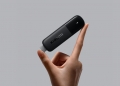
A small pilot study was held to test the concept. Researchers recruited 12 men and 12 women (who had no ocular disease), whose ages ranged from 28 to 72. Each participant was given a small handheld flashlight that emitted a red light with a wavelength of 670 nanometers.

They then spent three minutes each day looking into the light over a period of two weeks. The study found that the 670 nanometer light had no impact in younger individuals, but for those around 40 years and over, they’ve noticed significant improvements.

Cone colour contrast sensitivity (the ability to detect colours) improved by up to 20% in some people aged around 40 and over. For rod sensitivity (the ability to see in low light), those around the same age saw improvements as well—though less than colour contrast. Study participants under 40 also experienced some improvement, but didn’t see the same jump as older subjects—as younger eyes haven’t declined as much as older eyes.

Glen Jeffery also mentioned that the red lights they used are safe and have found no ill effects. However, Dr. Raj Maturi, an associate professor at Indiana University School of Medicine, wasn’t ready to embrace the idea.

“The data set could be brought down by three or four subjects,” he noted.

The pilot study was small and only included 24 participants. To really test these insights, it’ll take a double-blind controlled study with a larger group of subjects and longer monitoring over time.


[ SOURCE, 2 ]

Related reading

Mercedes F1 team developed a breathing aid for Covid-19 patients
Widely available drug identified by Monash scientists may prove effective against COVID-19
Tags: OphthalmologyUCLUniversity College London
Dzamira Dzafri

Dzamira Dzafri

POPULAR

Upgraded To a New Phone? Cool. But When Was the Last Time you Upgraded your Shaver?

November 10, 2025

5 Reasons Every Home Should Have a Smart Security System

November 11, 2025

Solar ATAP: The new solar programme for consumers will only start in 2026

December 2, 2025

Staring at red light can help improve your eyesight, according to UCL-led study

July 1, 2020
Perodua QV-E EV

Perodua QV-E is now official: Electric sportback with 201hp, 445km NEDC range, priced at RM80k not inclusive of battery subscription

December 1, 2025

GrabRewards is now GrabCoins: Now with even more ways to earn and save

November 17, 2025

Copyright © 2025 · SoyaCincau.com
Mind Blow Sdn Bhd (1076827-P)

  • ADVERTISE
  • DISCLAIMER

Copyright © 2025 · SoyaCincau.com – Mind Blow Sdn Bhd (1076827-P)

  • ADVERTISE
  • DISCLAIMER