

The Kaspersky Q1 2020 Distributed Denial of Service (DDoS) attacks report reveals that the overall number of attacks grew during the first three months of the year, especially for municipal and educational sites. This is most likely due to the fact that hackers are taking advantage of the current pandemic when people are heavily reliant on digital resources to work or learn from home.
“Outage of internet services can be especially challenging for businesses now, because this is often the only way to make goods and services available to their customers. In addition, widespread adoption of remote working opens new vectors for those responsible for carrying out DDoS attacks. Previously most attacks were conducted against the public-facing resources of companies. We now see that DDoS attacks target internal infrastructure elements, for example, corporate VPN gateways or email servers,” said Alexey Kiselev, Business Development Manager of the Kaspersky DDoS Protection team.
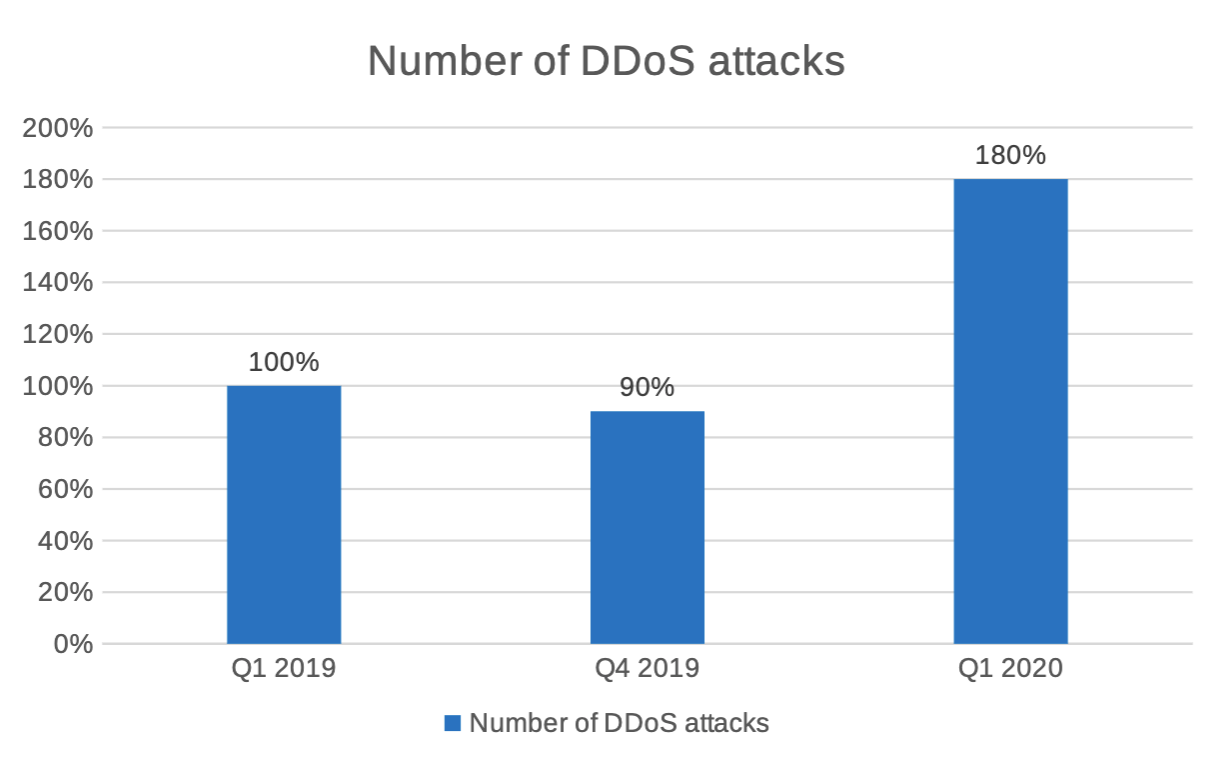
In the beginning in the first quarter of 2020, the COVID-19 pandemic had already affected almost all activities as they had to make their shift online. An increase in online resources attracted online attackers to pursue vital digital services, or services that rose in popularity.
The services affected in February and March included US government’s Department of Health and Human Services, a group of hospitals in Paris, and servers of an online game. With this happening during the first quarter of 2020, the number of DDoS attacks tripled, compared to the same period in 2019.
“The growth in attackers’ interest is caused by the fact that people are becoming more reliant on these online resources remaining stable and accessible during the outbreak. If they have seen conflicting messages about the virus and what preventive measures can be taken, people may look at official sources of information for more assured guidance. Many schools and universities have also shifted to online lessons,” wrote Kaspersky in their press release.
To protect your online business or site in case of a DDoS attack while working from home, Kaspersky recommends taking the following measures:
- Do not panic. Unexpected traffic peaks may look like a DDoS attack, but these instances can be caused by legitimate users. They can visit resources which were not as popular before, at times they were not previously accessing them.
- Conduct a fault tolerance analysis of your infrastructure to identify weak nodes and increase their reliability. Attack vectors and traffic peaks are changing, so some resources may work unstably.
- Consider DDoS protection for your non-public services. Their importance to business continuity may increase, making them a target for malefactors.
For more information of DDoS attacks in the first quarter of 2020, click here.
[ IMAGE SOURCE ]