
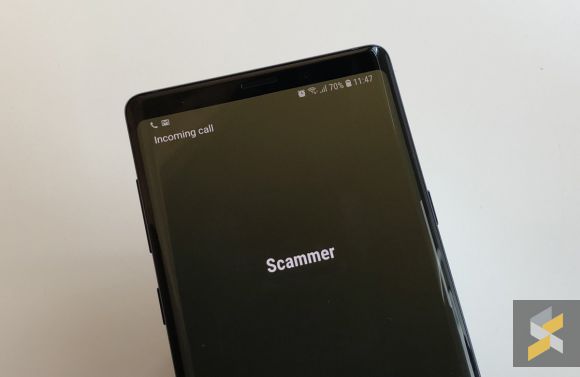
Online scammers these days know all kinds of tricks and techniques to get you to hand over your personal information. Therefore, it is important to protect yourself when strangers or people with malicious intent approach you, asking for your personal details. To help you out, the Royal Malaysian Police (RMP) has published a couple of tips that you can use to stay safe.
According to a post shared on Facebook by RMP, a female victim recently lost RM9,500 when she encountered online banking scammers impersonating the police. The victim received a call from an alleged Negeri Sembilan court regarding the arrears of her RHB loan. The call was then “transferred” to the police headquarters in Bukit Aman and the victim was forced to reveal her personal information such as her username, password and also TAC number for “verification” purposes.
Banks today have tried their very best to improve online security in order to regain customer’s confidence and trust. However, we as a consumer should take extra precaution to secure our personal information because all of those security measures would be pointless if we aren’t careful with our private details.
Here is some advice from RMP on how we should protect ourselves from online banking scammers:
1) You should not easily believe in scammers impersonating Police, MACC, BNM and Bank officers.
There are various scammers today who impersonate authorities and come up with different ways to fool people into divulging their personal details. As a rule of thumb, you’re not obligated to give your personal details to anyone over the phone. So if someone you don’t recognise calls you — even if they say they’re from the bank, police or whoever — just hang up.
If you want to verify if it’s a legitimate call, you can call them back on their official numbers to do so. For example, if someone suspicious calls you “from the bank” regarding your credit card, you can always hang up and then call the bank back with the number that’s printed on the back of your card.
2) Do not disclose your bank account information to any parties.
Keep your personal details secure. Do not share any information about your bank accounts to anyone. Scammers may use your information to create a fake identity or to target you with a scam.
Even banks will not ask you for your account username or password, especially not over the phone, and you’re also not obligated to share that information with them. If the call sounds dodgy, just hang up.
3) Do not share your Transaction Authorization Code (TAC).
TAC is part of a two-factor online security system that’s used to verify that you are the rightful person performing the transaction. For example, when you make an online transaction, you will need to log into your account and have the bank send you a TAC number before your transaction can be approved. If you’ve given your TAC number to others, it means that you’ve agreed to the transaction. Besides that, a bank will never verbally ask you for your TAC number under any circumstances. If they do, it’s probably a scammer.