-
Recent Reviews
Categories
-
Archives
-
Calendar
Ads
In Malaysia, competitors don’t utter each other names, top execs in big board rooms shun the mention of a competitor’s name in their presence. It is forbidden, a cardinal sin punishable by death. Ok maybe that’s not entirely true but it is very rare, almost unheard of for a brand to mention its direct competitor so openly.
For a brand to mention its competitor is one thing but for a brand to promote and display said competitor’s logo is almost unbelievable!
Well the social media people at P1 thought that they’d be good sports and share a contest that their competitors are running.
Yes, via its Yes World portal, is running a ticket giveaway contest for the upcoming premier of “Cowboys vs Aliens” and while Yes is promoting the contest via its social media channels, P1 thought they’d give a helping hand and promote the contest on their social media channels as well. This is tremendous! In all our years in this industry, we’ve never seen anything like it.
The rational behind it? P1 says they promoted the contest because “everybody loves free tickets no matter who gives them out”. Sensible logic, we say.
Is the world about to end? Probably not. But its definitely a new beginning. Kudos to P1 for setting the positive trend. We’re hoping other brands will follow suit. What P1 did goes a long way in creating a good perception for the brand, or its social media channel at the very least. Now, all that remains if for them to up the ante and fix that darn network of theirs (sorry P1, we still think its problematic)
In the meantime, let’s see if the advocator of “positive change” will reciprocate the goodwill gesture.
So it seems Malaysia has a new 4G operator.
Yesterday, Puncak Semangat Sdn. Bhd. (PSSB) announced that it will be the first Bumiputera company to offer telecommunications services based on LTE. It’s Managing Director, Datuk Abdullah Kadir Bacha says that the services PSSB will offer will reduce the digital gap between rural and urban areas by offering broadband access and related content to all Malaysians — all the same-old, same-old PR speak.
PSSB says that it wants to deploy a nationwide 4G network based on LTE but there was no timeline given on when this network will be deployed.
PSSB is a privately owned company that was founded in 1993 with five other subsidiaries under its name.
A quick check on Google revealed very little about PSSB and its MD that’s relevant to this news. Building a mobile network is tremendously complex and requires huge sums of money. In the course of the mobile industry in Malaysia, many have tried and many have failed. In terms of 4G, out of the four, all but only two WiMAX operators are actively in business at the moment. Even established 3G operators are cautious when it comes to 4G deploymen though Maxis and DiGi have indicated that they are looking to deploy LTE networks sometime in 2012.
So the question is, does PSSB have what it takes to deploy a nationwide 4G network? We’re not saying “no” but looking at past records of other operators and judging by the lack of background info on PSSB, its difficult to say “yes” as well.
What do you think?
[source]
Here’s some geeky comic relief to brighten up your hump day courtesy of Scott Adams.
[source]

Now this is a brilliant idea. Combine a 4G MiFi with the form factor of a slim battery pack for your iPhone 4 to slide snugly into. The KT Egg Sleeve is just a device.
The Egg Sleeve is a 4G MiFi that takes a form factor of a battery pack for the iPhone 4. So now instead of carrying two separate devices (iPhone and MiFi), you can power your iPhone 4 with 4G connectivity in a sleek piggyback sleeve form factor.
We’re not sure if the Egg Sleeve is also a battery but it does come with a 1500mAh battery to give you 5 hours of 4G connectivity bliss. Overall the sleeve adds 68g of heft and just over 17mm of bulk (in terms of thickness) to the iPhone 4. Negligible considering the how much faster things load up on 4G.
The KT Egg Sleeve retails for KRW128,000 which about RM350 at today’s exchange rate. For around that price we can definitely consider something like this mating with our iPhone 4 (provided of course the 4G network performance is up to par).
So we’re putting out to P1 and Yes this challenge. The product people from both operator know that this is a bloody good idea. Jadi, tunggu apa lagi? Which among Malaysia’s two top 4G operator is going to bring this innovation to Malaysia?

Google has announced another new official Android device, the Nexus S 4G. This comes after the original Nexus S device and it also runs on the latest Android 2.3 Gingerbread OS. Just like the Nexus S, the Nexus S 4G is co-developed with Samsung and it also features the same 4″ Contour Display with Super AMOLED. The device currently is available via Sprint which allows it to take full advantage of its 4G WiMAX network. Before you get someone in the US to buy one for you, do realise that this Nexus S 4G runs on CDMA/EV-DO network instead of GSM network.
At the same time, Google has also announced that existing Sprint customers will be able to utilise Google Voice while keeping their same number. For those who didn’t know, Google Voice lets you stay connected on multiple platforms with just 1 number. You can read up more about this in our previous post here.This sounds similar to Yes‘s voice service where all your devices can share the same ID. Watch the demo video after the break to get a clearer picture.
Nexus S 4G will be made available for online order this coming spring and shall make their way to Sprint retailers and Best Buy stores in the US.

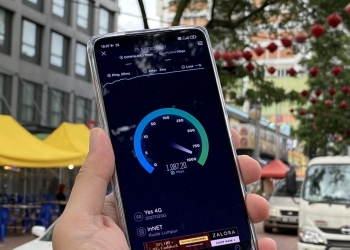
When we went on a road test to Penang earlier on, Yes 4G coverage on the North South highway wasn’t really as covered as we would expected. The speeds were great at areas with coverage but the lack of coverage makes it a tough choice if you require seamless connectivity on your trip up north.
With Chinese New Year around the corner, most people will be traveling back to their respective home towns outside the Klang Valley. Now Yes has proudly announced that North South highway is now powered by Yes 4G. This makes long journeys more entertaining provided that their coverage is truly seamless throughout the route.

P1 has started the new year with a revamp of its fixed broadband packages for home and business users. Previously they had 3 home and 2 business plans with speed offerings between 400kbps to 2.4Mbps but now they have bumped their highest Pro plan with 4.8Mbps download speed.
To make it simple, P1 no longer offer separate plans for business or home users so there’s only 3 plans to choose from right now – Lite with 400kbps, Plus with 1.2Mbps and Pro with 4.8Mbps. This also means that they have stopped offering unlimited plans which was previously exclusively for business users.

The Lite and Plus plan remains unchanged as it maintains the same speed, quota and monthly subscription. However with the new rates, existing Plus users are clearly enticed to get 4X the download speed with 10GB additional quota for a mere RM40. That’s only RM4/GB for additional quota for those who exceed their typical 20GB quota for Home Plus plan.
Earlier on, P1′s Pro plan was originally priced at RM199/month for 2.4Mbps download speeds at 40GB quota a month. Probably knowing that this is too much for a wireless broadband service, they later reduced the subscription fee to RM139/month while reducing the quota to 30GB a month.
With the latest revision, Pro users get to enjoy much higher download speeds but like any other wireless services, it all depends on the network congestion of your area. We hope that P1 is ready to deliver 4.8Mbps download speeds to avoid situation of over-promising like its P1 W1GGY some time ago.
The offer is also made sweeter as P1 is giving all plans additional 50% off for the 2nd and 3rd month subscription, which is basically 1 month worth of savings. For more information, head to P1′s broadband promo page.

Samsung has also introduced another new member into the Galaxy family with the Samsung Infuse 4G. This is a HSPA+ smart phone that’s tied to AT&T which features a 1.2GHz processor and a massive 4.5″ screen. The screen size puts it between the likes of Desire HD/Evo and the Dell Streak. At time of announcement, it runs on Android 2.2 Froyo with the usual TouchWiz skin you’ll probably get from the Samsung Galaxy S. There isn’t much details revealed. Even the back of the device is not revealed yet as it is still yet to be confirmed.
What’s new is that the Infuse 4G’s screen is using Super AMOLED Plus which Samsung claims as an improvement over Super AMOLED displays. From some explanation we saw, Samsung increase the sub-pixel count by 50%, which is 12 sub-pixels instead of 8 to make a screen much more visible under day light conditions. As a result, text and images should look more crisp while maintaining its vibrant colour. We can’t wait to see such display for ourselves as Super AMOLED on the Galaxy S looks awesome already.
[ SOURCE ]
Yesterday P1 launched the MF230 its very own MiFi device making it the sixth operator to offer portable hotspot in Malaysia, despite being the first to indicate that it will be launching a MiFi.
So now that we have a selection of MiFi from virtually all of the mobile operators in Malaysia, 3G and 4G, the inevitable question in consumers’ minds would be, which operator provides the best offering? Well we’ve taken out all the guesswork for you and compare all the MiFi plans available in the market based on device pricing and subscription costs over 12 and 24 months. Going a step further, we’ve also taken consideration of each operators respective bundled rebates, discounts and upfront costs.

![]() | Celcom, DiGi, Maxis, Mobile Devices, P1, P1, Players on the Field, U Mobile, Yes |
![]() | 3G MiFi, 4g, 4G MiFi, 4g wimax, Celcom, Celcom Mifi, DiGi, DiGi MiFi, Huawei MiFi, Maxis, Maxis MiFi, mifi, P1, P1 4G, P1 MiFi, U Mobile |

Yes says they deliver a mobile 4G experience. With this notion in mind, took our Yes Go on a road test in KL and we’ve taken it on a road test in PJ.
From our findings, both tests produced consistent results. The Yes network is indeed capable of delivering mobile data services but there are several gaps in its coverage that we hope Yes can cover quickly to deliver true seamless mobility broadband. Having said that and considering the fact that Yes is a new network, we were mightily impressed by the extent of the network coverage so far as well as the speeds that we were able to achieve during the previous two road tests.
So things are looking peachy for this new network but we’ll have to keep reminding you this is still a new network with a relatively smaller load on it compared to the more established players. We’ve heard so many times before that Malaysians don’t mind paying for their Internet so long as it is consistent and reliable. This looks to be an opportunity in which YTL can capitalise on. There is no secret formula to being a successful Internet service provider, all they need to deliver is consistency.
As we’ve been enjoying very good speeds on the Yes network, we hope Yes is able to keep this speed consistent even as the network gets loaded up with subscribers. If they can, then there’s really nothing to hold Yes back in winning the hearts and wallets of Malaysians.
So back to our topic of discussion. We’ve shared with you our findings on the performance — both in terms of mobility and speed — of the Yes network in certain areas in the Klang Valley, the question now is how does Yes perform outside Klang Valley?
It’s common sense for telcos to focus the bulk of their network resource towards market centres and high densitiy areas. This means more that often than not, outlying rural areas are not as well covered as it should be. At launch Yes boasts a population coverage of 65% deploying over 1,000 base stations throughout the country. This is more than its current 4G competitor P1 which currently claim around 40% population coverage with under 900 base stations currently being deployed.
All this is fine and dandy but right now what we want to know is where exactly in the populated areas is the 65% coverage focused on. Can Yes deliver consistent connectivity outside city centres? How is the network performance in areas outside of KL?
To find out, we took our trusty Yes Go along with USB modems and SIMs from DiGi, Maxis and U Mobile and hit the road up north to Penang for a mega road test shootout. On the way, we also wanted to find out if the Yes network has indeed got most of the North-South expressway covered.
Initially their map showed coverage blanketing most parts of the highway however a day before our trip, we found out that the map has been “updated” revealing a completely different coverage map with much less areas covered. This got us contemplating if we should carry on with the test as it looks like there is no coverage on our route, but with the understanding that sometimes coverage maps can be inaccurate, we continued with the test anyway.