
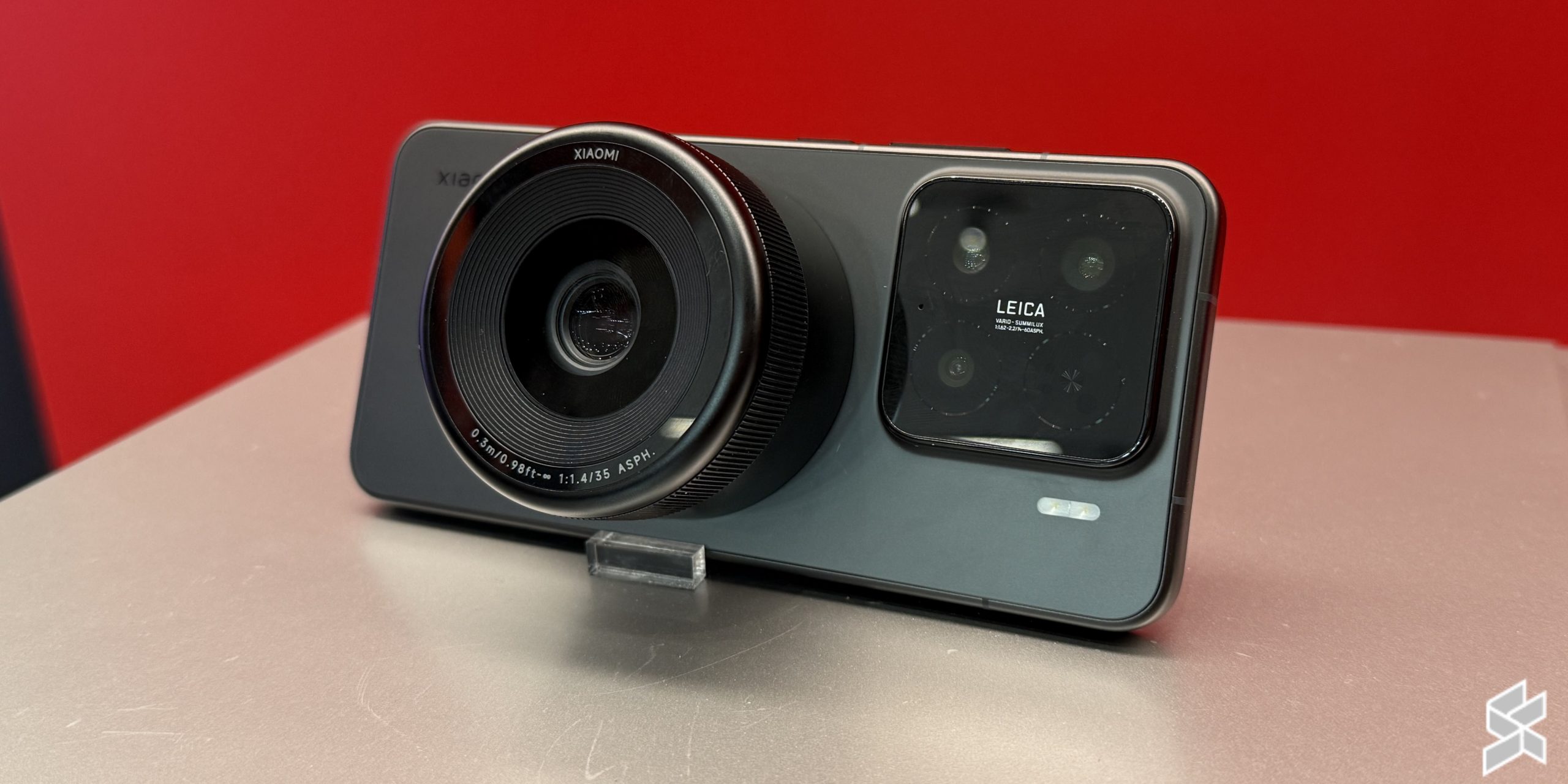
Smartphone cameras have come a long way, but due to size constraints, they are still no competition against dedicated DSLR or mirrorless cameras. To bridge this gap, Xiaomi has come up with its Modular Optical System, a concept that could redefine mobile photography. I had the chance to experience it firsthand at the brand’s booth at MWC 2025.
What is Xiaomi’s Modular Optical System?
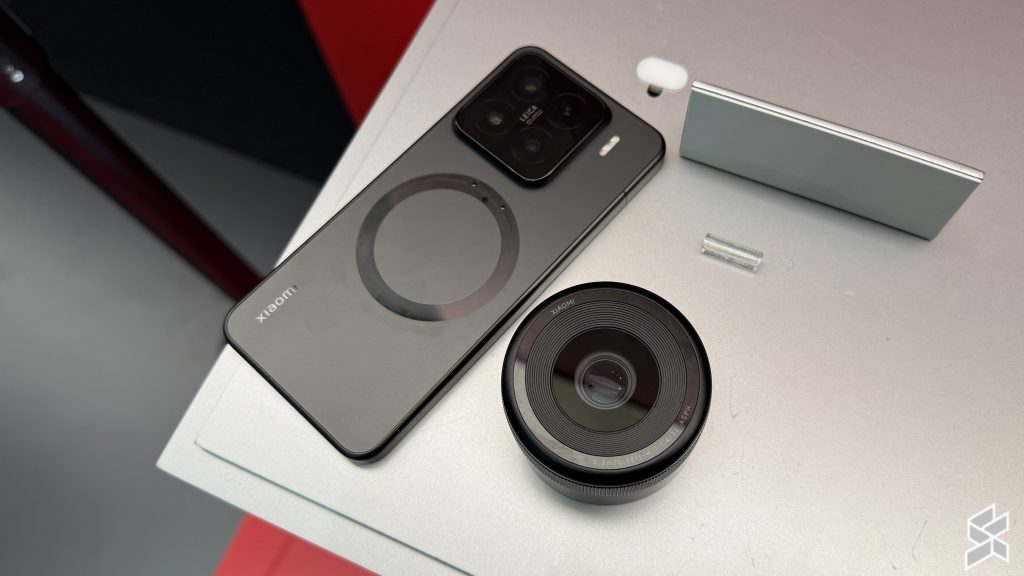
Xiaomi’s Modular Optical System features a detachable lens module that connects to the back of a smartphone, in this case a modified Xiaomi 15, via pogo pins and magnets, temporarily replacing the phone’s built-in camera system. Data transmission between the lens and the phone is handled by Xiaomi’s proprietary LaserLink system, boasting speeds of up to 10Gbps.
The lens itself comes with a fixed 35mm focal length, and houses a 100MP Light Fusion X Type micro four-thirds sensor, which pixel bins to 25MP. Note that this is larger than the 1-inch sensor found in the Xiaomi 15 Ultra. Also, it can capture rather crispy bokeh thanks to its aperture range of between f/1.4 and f/11.


With the lens attached, you can operate the phone’s camera app as usual. Autofocus is available with a simple tap on the screen, while manual focus can be adjusted via a focus ring on the lens, which offers essentially zero latency.
Unlike standalone camera accessories, the lens has no built-in battery, instead drawing power directly from the phone. To optimize efficiency, it automatically powers off when not in use or when you switch back to the phone’s standard camera system.
While still a concept with no confirmed release date, which means you can’t run out to buy it just yet, the Modular Optical System already feels refined and well-executed.
Didn’t Sony try this a decade ago?

If Xiaomi’s Modular Optical System gives you a sense of déjà vu, you’re not alone. Sony attempted something similar back in 2013 with the QX10 and QX100 lens attachments.
However, those models relied on WiFi Direct for communication, which introduced some latency and connectivity issues. Additionally, they required Sony’s now-defunct PlayMemories app to function.

Ultimately, we’re talking about products that were launched over 10 years ago. So it’s not entirely fair to compare them against Xiaomi’s Modular Optical System. One advantage Sony’s lenses had over Xiaomi’s, at least based on my experience at MWC 2025, was cross-platform compatibility, as they worked with both Android and iOS. In contrast, Xiaomi’s system appears to be proprietary.
Xiaomi’s Modular Optical System seems pretty promising, and might just be what the future of smartphone photography will look like. But will it gain mainstream adoption, or is it destined to remain a niche product?
Would you prefer Xiaomi’s modular approach or Realme’s system, which allows you to attach full-fledged camera lenses to a phone?