
• 中文版
  • BM
  • News
  • Deals
  • Reviews
    • First Impressions
    • Hands-on
    • Comparisons
  • Tech
    • Mobile
    • Computers
    • Cameras
    • Wearables
    • Audio
    • Drones
  • Telco
    • Celcom
    • Digi
    • Maxis
    • Time
    • Tune Talk
    • U Mobile
    • Unifi
    • Yes
  • Cars
  • Contribute
  • Jobs
Menu
  • 中文版
  • BM
  • News
  • Deals
  • Reviews
    • First Impressions
    • Hands-on
    • Comparisons
  • Tech
    • Mobile
    • Computers
    • Cameras
    • Wearables
    • Audio
    • Drones
  • Telco
    • Celcom
    • Digi
    • Maxis
    • Time
    • Tune Talk
    • U Mobile
    • Unifi
    • Yes
  • Cars
  • Contribute
  • Jobs
Search
  • Tech
    • News
    • Mobile
    • Computers
    • Cameras
    • Wearables
    • Audio
    • Drones
  • Telco
    • Celcom
    • Digi
    • Maxis
    • Time
    • U Mobile
    • Unifi
    • Yes
  • Reviews
    • First Impressions
    • Hands-on
    • Comparisons
  • Buyer’s Guide
  • Opinions
  • Digital Life
  • Video
  • Deals
  • How-To
  • Cars
  • Bahasa Melayu
  • EV
  • Contribute
  • Advertise
Menu
  • Tech
    • News
    • Mobile
    • Computers
    • Cameras
    • Wearables
    • Audio
    • Drones
  • Telco
    • Celcom
    • Digi
    • Maxis
    • Time
    • U Mobile
    • Unifi
    • Yes
  • Reviews
    • First Impressions
    • Hands-on
    • Comparisons
  • Buyer’s Guide
  • Opinions
  • Digital Life
  • Video
  • Deals
  • How-To
  • Cars
  • Bahasa Melayu
  • EV
  • Contribute
  • Advertise
Search
Close
Home News

Malaysia’s broadband still lags behind

  • BY Arif Lee
  • 21 December 2015
  • 4:28 pm
  • Comment
Share on FacebookShare on Twitter

151221-Akamai-SOTI-Report-2015-05

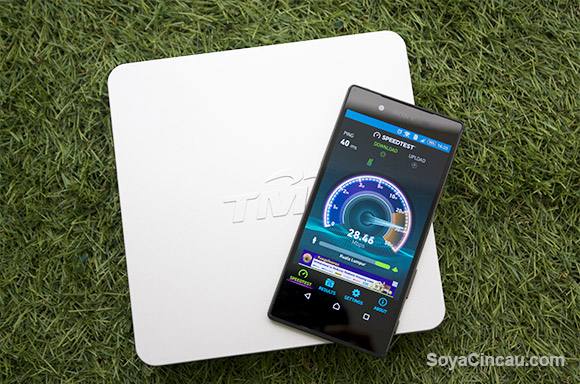
One of the leading content delivery networks (CDN) and cloud-based service providers, Akamai Technologies, has just released their global State of the Internet Q3 report and our data shows that we’ve dropped the ball in some areas.

In terms of data presented, the Intelligent Platform gave us information regarding key metrics, as followed: connectivity speeds, broadband adoption rates, usage of IPv6 and added observations from Ericsson (a partner).
151221-Akamai-SOTI-Report-2015-03i

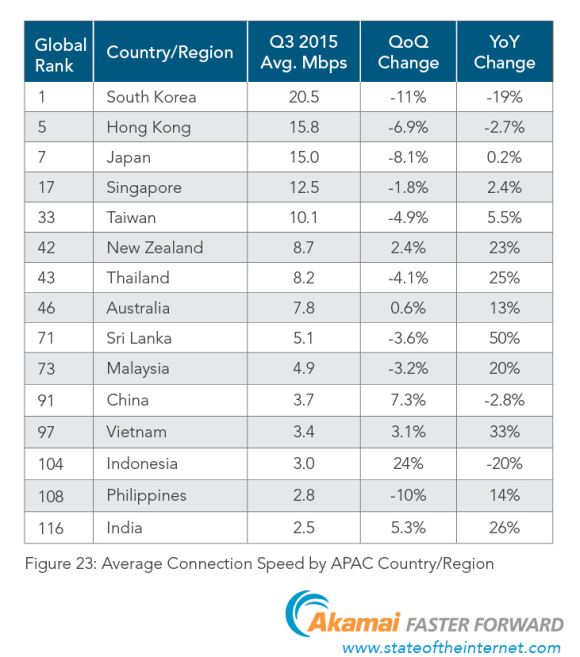
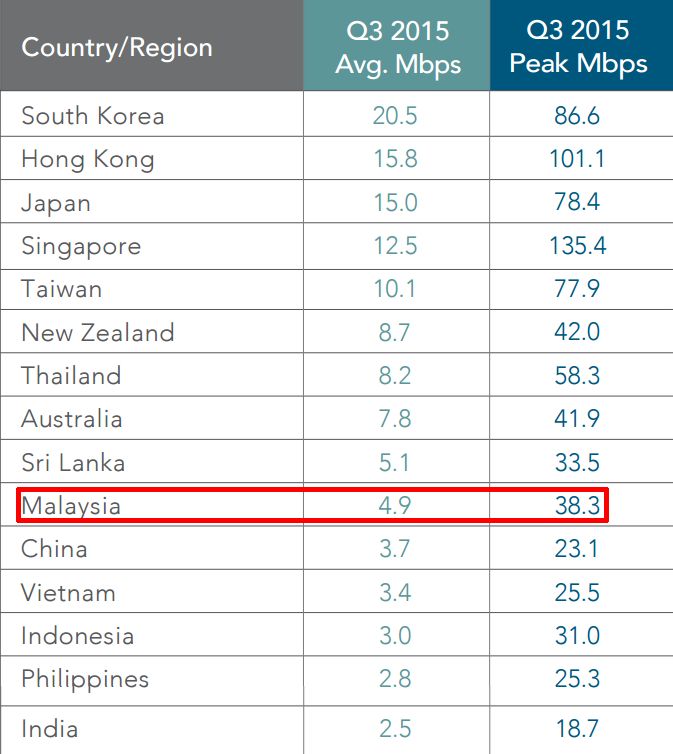
Sitting at a lowly 73rd spot with an average speed of 4.9 Mbps, we fall behind neighbours Thailand (43rd) and Singapore (17th, while at the same time the Ceylonese Island of Sri Lanka betters us by 2 spots. YoY/Year on Year, we’ve made a steady improvement of 20% but there’s still much to be done.

Our numbers show a slight 3.2% dip, based on Q2, possibly indicating a sudden surge of users subscribing to more affordable/slower plans, feeling the pinch from the economy or that our internet providers can’t keep up with demands, rolling out infrastructure slower than usual in this particular period.

Interestingly, TM the major ISP in Malaysia revamped their plans in the month of October, leaving us to believe that Q4 will bring about more positive numbers. If you’re unaware TM is now offerings 30Mbps / 50Mbps download speeds but at a lower monthly fee – you can read about them here.
151221-Akamai-SOTI-Report-2015-04

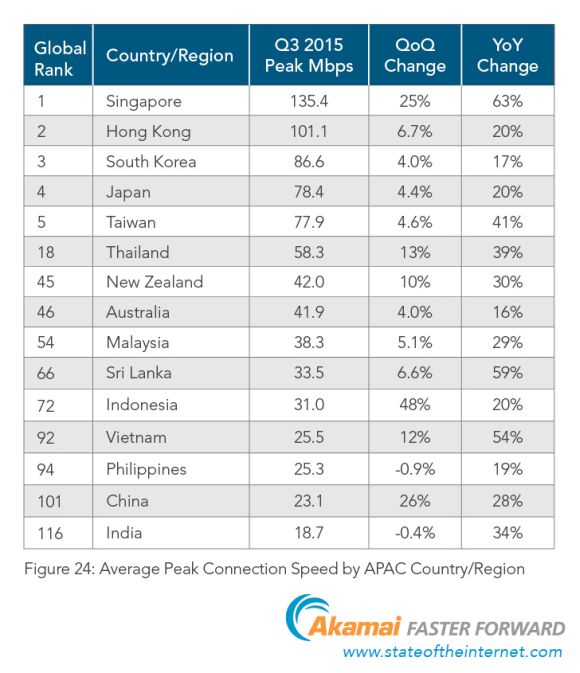
Looking at average peak connection speeds, we managed slightly better, at the 54th spot but our broadband providers still have room to improve. Our government has allocated RM 1.2 billion on expanding internet access points for non-urban locations, upping the current 5Mbps speeds to 20Mbps and we’re likely to see these measures starting to show in the coming year. According to Ookla’s speedtest report for Malaysia, it seems that our 4G LTE enabled network operators are capable of delivering speeds faster than fixed broadband. In developed markets, it should be the other way around. 

The stark reality is that it’ll be hard to roll-out this basic need (by our standards) to rural areas, especially in East Malaysia – where even the major states have a lack of accessibility for high-speed broadband. An issue that still haunts most Malaysian users on TM’s network, is the fact that they’re still on Streamyx “broadband”, a lower-end network that offers slower speeds at a unappealing price. In retrospect, the most affordable Streamyx plan is offered at RM 116.60 per month for 1Mbps, which means it makes more sense for consumers to jump to UniFi, if it’s available in their area.

Hopefully, we can only move onwards and upwards, hoping that eventually the basic networks infrastructures will be opened up for other competitors, making the internet more affordable for all of us. 
151221-Akamai-SOTI-Report-2015-02

[ SOURCE ]

Tags: Akamaibroadband speedEricssonInternet speedMalaysia broadband speedMalaysia internet speedSingaporeSri LankaTelekom MalaysiaThailandTMUnifi
Arif Lee

Arif Lee

POPULAR

Upgraded To a New Phone? Cool. But When Was the Last Time you Upgraded your Shaver?

November 10, 2025

5 Reasons Every Home Should Have a Smart Security System

November 11, 2025

Solar ATAP: The new solar programme for consumers will only start in 2026

December 2, 2025

Malaysia’s broadband still lags behind

December 21, 2015
Perodua QV-E EV

Perodua QV-E is now official: Electric sportback with 201hp, 445km NEDC range, priced at RM80k not inclusive of battery subscription

December 1, 2025

GrabRewards is now GrabCoins: Now with even more ways to earn and save

November 17, 2025

Copyright © 2025 · SoyaCincau.com
Mind Blow Sdn Bhd (1076827-P)

  • ADVERTISE
  • DISCLAIMER

Copyright © 2025 · SoyaCincau.com – Mind Blow Sdn Bhd (1076827-P)

  • ADVERTISE
  • DISCLAIMER