It’s a slow day today so we’re going to venture into more general tech territory.
Microsoft last week unveiled InstaLoad, a technology that “enable users to insert batteries into a device in either + or – direction and the device simply works. Users do not have to search for a hard to read diagram to determine how to insert the batteries.”
Really Microsoft? This is such a big problem that you have to waste valuable time and resources to develop such a technology?
How hard is it to read the polarity diagram on the back of mouse.
Wonder how much of a premium will Microsoft put in devices with InstaLoad tech in them.
What do you think? Are battery polarities such an issue that someone has to come up with this? We say, no thank you.

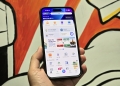
No matter what Apple want you to believe, the iPhone 4’s hardware is flawed and no software patch is going to solve the problem. Even experts are saying the same thing.
But if there is no design issue at work here, why did Anandtech and I both show significantly different attenuation when holding an iPhone 4 in a bare hand compared to holding it in a case? And why did Apple themselves recommend “using a case” as a possible solution to the problem? — Richard Gaywood, PhD on wireless network design from Cardiff University
The issue here is hardware, the antenna design is flawed. Despite technical data proving that the antenna on the iPhone 4 is better than its predecessor, its external design means it is more susceptible to attenuation than previous iPhones.
In our own observations, we stated that the only way to fix the attenuation issue on the iPhone 4 is to insulate the external antenna, and it seems at the moment that the official iPhone casing – the Bumper – is a perfect solution. Reviewers with even more technical knowledge and equipment have come to the same conclusion.

YTL Communications, another 4G WiMAX operator in Malaysia has announced a Education Partner Program (EPP) for students. This program allows free internet access for 3 years per student with a quota of 300MB per month.
YTL has formed its first EPP partnership with UTM, Skudai in Johor and they plan to create more 4G Campus networks in all public universities by end of 2010. We all have heard promises of commercial launch which has yet to materialise. This could be YTL’s early test site for its 4G WiMAX network and at the same time use it as a showcase of what YTL can deliver.
However even if YTL manages to cover all public universities, they will still fall short of WiMAX deployment targets behind P1, AMAX and Redtone. After all the publicity stunts and PRs, we are still waiting to see YTL’s WiMAX to be launched commercially.
On the EPP plan, 300MB per month which calculates to 10.8GB for 3 years is barely enough for average student use. But who are we to complain if it is free? We wonder if YTL would come out with a paid student package for those who are serious about subscribing if the service is good.
If you’re studying at UTM Skudai, you can sign up here and do let us know your feedback.
You can check out photos from the EPP launch on their Facebook page.
[ SOURCE ]

The just released Samsung Galaxy S could be company’s bestselling mobile phone ever. In under 10 days, Samsung sold over 200,000 units of the 1GHz Android powered Galaxy S in Korea alone since it was launched on June 24.
Then again, this might not be a big deal considering the iPhone 4 sold close to 2 million units within the first three days of its in-store debut.
Back in Malaysia, we don’t have the official sales numbers for the Galaxy S at the moment but we were told that its close cousin, the Samsung Wave, is currently flying off the shelves with the first batch being all sold out.
Despite having very little hands on time with the Samsung Galaxy S during its launch last month, we find that there is a lot to like about the device. So much so that we would dare go as far as recommending the Galaxy S over the iPhone 4.
Yeap, you’ve read that right, we’d rather get the Samsung Galaxy S over the iPhone 4.
[source]

In an interview with UK’s Telegraph, Google CEO Eric Schmidt was asked if there will be a Nexus Two for the Google device diehards out there.
His answer left no lingering doubt in anyone’s mind that there will not be one, despite the many rumours floating around about such a device is currently being a work in progress.
For those who are unaware, rumours of a second Nexus device surfaced sometime early May with Motorola being named as the manufacturer that will be working with Google to bring the now vapour ware device into the market.
If Google is not going to continue with the Nexus legacy why bother with the device in the first place?
Google felt that the Android mobile platform needed a boost to showcase, what the OS could do with the right hardware and the right people behind it. Hence the partnership with HTC was established and the Nexus One was born.
You have to give credit, prior to the Nexus One, there wasn’t really a desirable Android device and from that perspective, we’ll give it to Google, with the Nexus One, they have succeeded in putting Android on the map. But we disagree with Schmidt when he says there’s no need for a Nexus Two.

A report from mobile app store analytics company distimo released this month revealed that the Android Market has the largest share of free applications compared to all other app store available today.
This includes Apple’s App Store for the iPhone and iPad, RIM’s Blackberry App World, Nokia’s Ovi Store, Palm’s App Catalog and Windows’ Marketplace. Interestingly, Windows has the least number of free apps amongst all the app stores.
What does this mean?
It means that the Android Market still has some way to go before it can compete with app store leader, Apple. Free apps may be good for users but it also highlights Android Market’s biggest weakness – distribution. Currently, paid apps distributed in the Android Market are limited to a few countries, this means the selection of apps from Android users in countries like Malaysia are limited to whatever that is currently free.
As it stands currently only 13 out of the 46 countries that can download apps from the Android Market have access to paid apps.
The open nature of Android and the Android Market is great and everything but Google really need to look into polishing up the Android Market to really take advantage of a strong and steady growth in terms of both the choice of devices as well as the number of users using its mobile platform. On top that Google has the very real issue fragmentation amongst Android devices that it has yet to resolve.
Head on over to after the jump for more juicy details of the report as well as a link where you can download the report for yourself.